Back to search
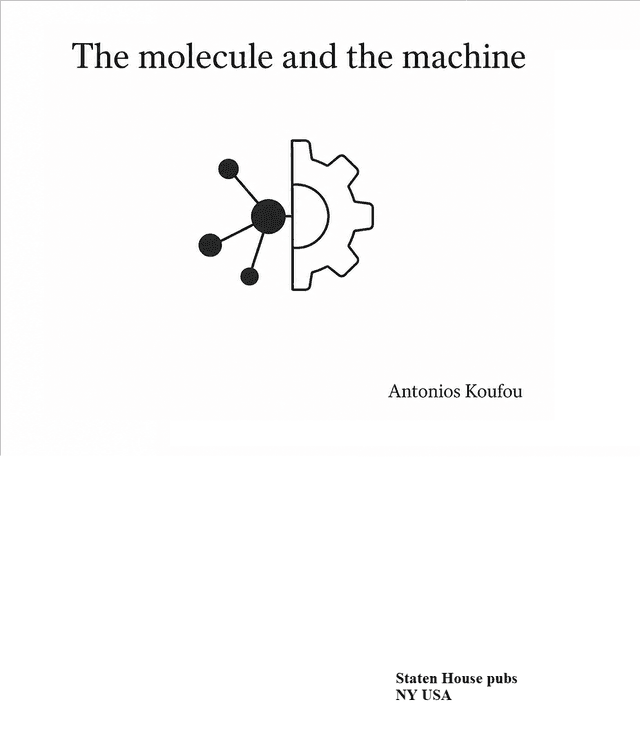
Cover of THE MOLECULE AND THE MACHINE

THE MOLECULE AND THE MACHINE

Chemical Weapons, Molecular Science and the Future of AI

What happens when one of the most dangerous products of modern chemistry meets one of the most powerful technologies of the digital age? The Molecule and the Machine explores chemical weapons from an unusual perspective: not only as instruments of terror and destruction, but as complex molecular systems that modern science can observe, analyse, simulate and increasingly predict. Beginning with the sarin attack on the Tokyo subway, the book explores how the behaviour of a single molecule can have consequences far beyond the laboratory. It then turns to the Salisbury Novichok incident, examining how analytical chemistry and international scientific cooperation transformed an invisible and uncertain event into identifiable scientific evidence. From there, the story moves from the laboratory to the computer. Molecular dynamics, computational chemistry, quantitative structure–activity relationships and machine learning are changing the way scientists understand molecules. Instead of relying exclusively on experiments, researchers can increasingly use computational models to investigate molecular behaviour and predict properties that may be difficult, expensive or dangerous to measure directly. But prediction has limits. A simulation is not reality, a machine-learning model is not understanding, and every computational result carries assumptions and uncertainty. The book therefore asks not only what artificial intelligence can do, but also what it cannot do—and why experimental science remains essential. At its heart, The Molecule and the Machine is a story about the changing relationship between chemistry and computation. It asks whether the technologies developed to understand molecules might one day help society identify emerging chemical threats before they become disasters. Sarin demonstrated what a molecule could do. Novichok demonstrated what science can uncover. The machine may offer something different: the possibility of seeing the molecular threat before it becomes a human tragedy.

Genres

ScienceTechnology

ISBN

9798906784315

Format

Print / Paperback

Contributor

Antonios Koufou

Author

Antonios Koufou is a Greek physical chemist and computational chemistry researcher whose work focuses on the application of molecular simulations, computational chemistry and machine learning to the study of complex molecular systems. He holds a PhD focused on the study of physicochemical properties of chemical warfare agents through the combined use of molecular simulations and machine learning. His research has particularly examined nerve agents of the G-series, V-series and A-series (Novichok), using computational approaches to investigate molecular structure, thermodynamic and transport properties, molecular interactions and other physicochemical characteristics. He has published research on the development and validation of molecular models for Novichok agents and on the use of molecular dynamics simulations to investigate their thermodynamic and transport properties. His work has also incorporated QSAR and machine-learning approaches to explore toxicological and physicochemical properties. His broader scientific interests include molecular dynamics, computational chemistry, molecular physics, QSAR, machine learning and the use of computational methods to address problems that are difficult or challenging to investigate experimentally. His academic profile identifies dynamic simulation, molecular physics and computational chemistry among his principal areas of expertise. Alongside his scientific work, Antonios Koufou has been involved in secondary and academic education in Greece, contributing to science education and the communication of chemistry and the natural sciences to younger audiences and young scientists. His research sits at the intersection of chemistry, computation and emerging artificial-intelligence methods, with a particular interest in how computational science can improve our understanding of molecular threats and contribute to future approaches to chemical security.